Book Review: Leaving Oxford by Janet W. Ferguson

29775126

A year ago, Sarah Beth LeClair was a rising star in her advertising firm in LA, living in Malibu, and living with her doctor boyfriend. But then the accident happened. After that, the freeways, the memories, and the ghosts of LA were too much and Sarah Beth moved back home to Oxford, MS.

Still an advertising prodigy, she’s gainfully employed, but Sarah Beth has a secret. Her anxiety about driving on a highway is so debilitating that she can’t leave Oxford. When she gets outside the city limits, she has a panic attack. So she doesn’t leave.

Oxford is also home to the University of Mississippi, or Ole Miss, and the cutest offensive coordinator of any football team in history. Jess McCoy’s career is on the rise, too. Ever since he decimated his shoulder playing college ball and realized he couldn’t play pro, he’s wanted to coach in the NFL. And the opportunity is right around the corner.

The only problem for Jess is that he meets the beautiful and captivating Sarah Beth and begins to have feelings for her that he’s never experienced before. Suddenly, the thought of leaving Oxford isn’t quite as appealing as it was before…

#

Real talk: a year ago I would have loved and adored most of this book (I would have still had a bone to pick, but more on that later). I wanted to love it now. I’m from Mississippi. Ole Miss is the rival to my own alma mater, but I could let that go for the sake of a cute, clean, Christian romance set in my home state. But it didn’t quite live up to my expectations. Sigh.

There are several things it had going for it. It had a fun meet cute. It was clean. It was Christian based fiction, which I know is not a pull for a lot of people, but I’m a Christian and I like it. Football. Mississippi. A ridiculous and adorable dog.

A year ago the only thing that would have gotten on my nerves was some of what she wrote about coaching. My family is heavily involved in college sports. In the acknowledgments, Ferguson thanks former members of the Ole Miss coaching staff, so I know she at least asked a few questions. However, there were some inaccuracies that the average reader might not have noticed. Because college athletics were a part of the livelihood of my home for many years, I noticed.

Still, I could have gotten over that. Most people, even hardcore college football fans in Mississippi would have skimmed over it without much thought. I could swallow that. And a year ago, I might have. But after studying crafting and editing blogs and learning to look beyond my own perspective, there are some other things that don’t quite work for me.

Some of the dialogue feels stilted or in the wrong character voice. It’s a small thing, but it happens in several places and suggests an editing issue. And it’s not the only one.

Oxford, MS has never been this white. Is it possible that Sarah Beth’s social circle and the staff she interacts with at Ole Miss, and her office building in LA are all (except one Latino man) white? Yes, it’s possible. But when she writes about Oxford, she talks about driving through or around different areas of town and never acknowledges any character, and I mean anyone who is Black. That’s hard to swallow. The population of Mississippi is nearly 40% Black. That number gets higher in certain areas of the state. The university staff as a whole is about 30% Black. So to write a book set entirely in Oxford, Mississippi and not have a single Black character is at best incomplete. And neither the author nor anyone in the editing and publishing process seemed to notice.

I don’t have anxiety. Sarah Beth’s reluctance to accept her diagnosis and her struggle regarding using prescribed medications could be true to form. I don’t know. But the author’s treatment of diversity makes me think that a sensitivity reader should probably have been called in for this too.

I’m not trying to rip Ms. Ferguson apart. I’m saying that this book had potential, but fell short. It still has some cute scenes. I loved her line about how Mississippians feel about North Carolina and the return zinger. But I feel like this reads more like a manuscript draft than a polished and published novel.

The Value of a DNF

books-book-pages-read-literature-159866.jpeg

A couple of weeks ago I mentioned that I had DNF’ed several books that week and ended up writing a review on one I revisited instead of something new. Last week, I didn’t write a review because of several more DNFs (and also because my anniversary was in the middle of the week and I chose to forego my review writing time to celebrate).

I’ve put down a lot of books without finishing them lately. At least, it feels like a lot. But this is coming from someone who, until about six months ago, would finish a book no matter what–barring any triggering issues. I always felt like I owed it to myself to see if the book got better. I needed to know for sure how it ended. To DNF was to give up. I’m not a quitter.

I’m still not a quitter, but I do place a little more value on my time. I wrote that post last week about finding a balance. Learning to appreciate a DNF is part of that balance. It took me a while to realize this, but it’s true. When I DNF I’m not giving up. I’m placing more value on my time than on the rest of the book. It might sound harsh, but it isn’t.

To DNF a book is not always a bad thing. In fact, sometimes it’s an opportunity.

Stick with me here.

As a writer, if someone DNFs my work it tells me something. Immediately, I know that there is an aspect of the story that isn’t working. I may have to ask questions to find out what, but knowing there is an issue is valuable information. The questions I ask will help me understand whether it is a small issue, a much larger one, or something beyond my control (e.g. just not their cup of tea). Whatever it is, it’s something I didn’t know before.

As a reader, if I ask some of those same questions I can learn a little bit more about:

1 – Myself. If it just wasn’t my cup of tea, why did I pick it up in the first place? What drew me to it? Is there a subject matter or style of writing I’m gravitating towards? A trope? A twist? Or, am I overwhelmed and a book that normally would have been fine is a turn off because the subject matter or main character are hitting a little too close to home right now?

2 – Editing. Okay, the book is something I would normally enjoy, so what’s the deal? Perhaps the book is too dialogue heavy. Or perhaps the interactions between characters are stilted. These are things that I might not have noticed as much before or at least been more forgiving of. But now, all I can see is a subpar editing job and it ruins my book experience.

3 – Self-care. My time is valuable. It’s also limited. I’m not going to waste it by making myself read something I don’t like. Especially not when I could be checking something else off my to-do list or getting some sleep. Or reading something that I love. Also, if there is something even remotely triggering, it’s always okay to put it down. I don’t owe the author anything.

4 – Publishers. If there is something glaringly wrong with or offensive in a book, I will look to see who published it. If it was self-published, that author will go on my mental list of writers to avoid. If it was published by a someone else, I’ll be more wary of their offerings going forward, since they didn’t see a big enough problem with the story to refuse to peddle it.

I’m sure given time I could think of other reasons that DNFs can be valuable, but I’ll stop here for now. What are some ways that you find a DNF valuable?


Finding a Balance

For most of us, writing is not our primary job. It is something we love and work hard for, but it isn’t what pays our bills. Or cleans the house. Or the other million and one things that make up daily life. For the majority of writers, writing is something we have to make time for before, after, and/or in between the other necessities of life. It can be difficult and daunting.

We give up our nights, weekends, lunch breaks, our children’s naps, anything that will give us a little more time at the keyboard. That doesn’t mean we don’t have families, friends, jobs, hobbies, chores, or special events that we can’t and won’t neglect.

And it doesn’t mean we should neglect ourselves either.

My writing is important to me. It’s a part of who I am. But it is only one part. I’m also a wife, a mother, a sister, a daughter, a friend, etc. Beyond that, I am also someone who loves sports, board games, learning–and teaching–self-defense through mixed martial arts, and volunteering with local groups/organizations of my choice.

If I abandon the other things in life I enjoy, or my other responsibilities, I feel guilty and my writing suffers. If I neglect my writing, I feel guilty and my sense of self-worth suffers. I have to find a balance. It’s not easy. If ever I perfect it, I’ll let you know.

In the meantime, I have to be intent on carving out time for writing and for the other parts of me. Because my experiences fuel my writing. And, frankly, sleep is non-negotiable. I’ve tried.

A lot of writing blogs I’ve read in the last few months have stressed the importance of taking a step back from your work during editing. Walk away from the project for a short while so your eyes are fresh when you come back and you’re more likely to notice things that escaped you before. Use that time in between to do something for yourself. Rent a movie. Run a race. Play a game. Take a long bath. Read something with no intent to critique or edit. Go to the gym. Do whatever it is that helps you feel human again.

You write, so you’re a writer. But it will never be the only thing you are. I’m sure even the overwhelmingly successful authors would say that they are more than their job. Don’t forget to let yourself be more. It’s okay to give yourself a night off once in a while. Your writing will probably be better for it and so will you.

It doesn’t mean you aren’t dedicated. You don’t have to be superhuman to be a successful writer. Nobody will doubt your dedication if you go on a date with your significant other, go see a sporting event with your kids, or go to bed early. You’re allowed to be human. You’re allowed to be you.

Your writing will still be here when you get back.


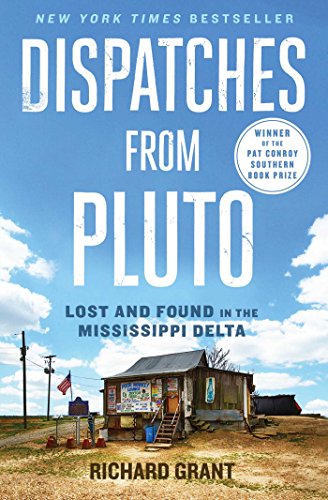
Book Review: Dispatches from Pluto by Richard Grant

I had a few DNFs this week, but was reminded of this gem when I recommended it to someone and don’t regret revisiting it.

515ompiob8l

Richard Grant is an English ex-pat who has been living in the United States for a number of years. While living in a small New York apartment, Richard took a trip with a friend of his to Mississippi. On a whim, he buys an old plantation house and moves into it with his girlfriend. And thus is the start of hilarity and truth.

Neither Richard nor his girlfriend are familiar with Mississippi, much less the Delta–not named for a geographical delta, but actually an alluvial plain. He is now a resident of Pluto, a town named for the mythological lord of the Underworld. And after stories for critters in the walls, battling bugs, and his initial feelings of complete isolation it doesn’t take much to figure out why.

He meets many interesting people along the way and starts to unravel the mystery of why the Delta is so different not just from the rest of the Mississippi, but the rest of the country. It is its own beast, something that fascinates Grant enough that he becomes enamored of his new home. A self-proclaimed nomad, he puts down roots.

But his transition is not without difficulty, and he relays stories as only an outsider can. Making friends with a Blues legend, an eccentric millionaire, a Hollywood celebrity, a local hunter, a cookbook queen, and many more, Grant doesn’t shy away from his observations about the racial tensions of the area or the major structural problems of the small towns throughout the region.

Despite its lingering problems, Grant declares that Mississippi is the best-kept secret in America.

#

I was born in the Mississippi Delta. The pictures across the top of my blog all come from places and events near my hometown. My entire family, including my step-family, originates from the same area. And this book brilliantly captures what makes the Delta so utterly unique.

The book barely scratches the surface on a lot of issues, both because it would take thousands of pages to delve deeply and the friendships with locals that help make the book what it is were still developing while he wrote it. But as I read it, I laughed until I cried. And on a couple of occasions, I just cried.

I moved out of the Delta when I was still in elementary school, but returned to visit family frequently throughout my childhood and young adult life. I can say with honesty, that it’s hard to recognize how weird of a place it is until you step outside of it. And seeing it through an outsider’s eyes is always both hilarious and humbling.

That’s the essence of this book. It’s a true account of this man’s experience as he tries to figure out how we, the people of the Delta, came to be the way we are. He talks about how his revelations affect his view of Mississippi in general and the Delta in particular. And let me assure you, the Delta is indeed a space all its own. I noticed in college at Mississippi State that most kids say things like “I’m from the coast,” or “I’m from Jackson,” with the same voice inflection that most people would say “I brushed my teeth this morning.” It’s just a fact. But when people say “I’m from the Delta,” it’s different. It’s a story. And Richard Grant wrote his book based on his attempts to figure out that story.

I didn’t read this book alone. My sisters and my stepmother read it and we would text each other back and forth about things we read. Mostly we were laughing at what the author thought was so utterly strange that was completely familiar to us. So if you want a pretty spot-on account of what makes the Delta tick, this is a great resource.


#WriteClub Battles Have Commenced!

This is just a quick reminder that as of yesterday (4/16) #writeclub battles have commenced over on dlhammons.com! Monday through Friday for the next three weeks, two 500 word writing samples will be posted. You (yes, you!) vote for your favorite. It’s a great way to give feedback to writers and to be a part of the fun.

Rules:

  1. The writing samples are anonymous and each presented under a pen name. You may hype the contest, but if you try to get votes for a specific writer or their pen name, they will be immediately disqualified. The contest is about the writing, not about how many followers a person already has.
  2. You can vote once per battle.
  3. You cannot vote anonymously. The writers are anonymous, but as a way to enforce the “only one vote per person per battle” rule the votes can’t be.**
  4. Voting stays open on a battle for several days. If you have missed the first battle or know that you will miss another, no need to miss out. You can still vote for it when you get the chance.

**Each time you vote you will be entered to win a Barnes and Noble gift card, so you want them to know who you are.

ARC Review: Unanchored by Stephanie Eding

Disclaimer: I received a free copy of this book in advance of its publication date in exchange for an honest review. It debuts next week.

unanchored-1600x2400

Cecily Hastings is a Welsh slave to the man her own parents sold her off to in exchange for food. She doesn’t remember what it’s like to be free, but it doesn’t mean she doesn’t crave it. She fears only two things in her pursuit of freedom, the beatings her master hands out at will and the Blood Pirate, the man who burned her village and killed her mistress years ago.

When her master gets drunk and swindled at the gambling tables, Cecily ends up being the payment. She is finally away from her master, but she’s not free. She’s been sold to none other than the Blood Pirate himself. Her worst fear has been realized.

But something doesn’t add up. The pirate who holds her captive treats her better than her master ever did. And she sees him freeing other slaves from around the British Isles as well. How could the man who burned her village and killed her mistress in cold blood be the man who buys her hair ribbons and protects her from harm?

When the British Royal Navy hot on their tails, Cecily has to make a choice. She can go with the soldiers and let them escort her back to her old master and let the fearsome pirate hang for his crimes, or she can grasp the only kind of freedom life has ever offered her and become the thing she hates most–a pirate.

#

This book reads as a young YA, in my opinion, but I thought it was fun and adorable. The underlying message of things not always being what they seem is felt over and over again. Sometimes bad guys look like good guys. Sometimes freedom doesn’t look like what you think it will.

It does romanticize piracy a bit, but it does so to make a point and has some fun with it in the process. The biggest drawback to the story is a general lack of diversity. All the characters more or less look the same and most of them blend into the background a little too easily. If you’re going to argue with me about Finnish and Welsh pirates being pretty monochromatic during the general era in question, I’m going to redirect you to the blog Writing with Color that had already addressed the subject (spoiler alert: Europe wasn’t ever actually lily white). 

On the plus side, the book has a clean romance arc and so is great for those teens (or any other age) who want an escapist tale without graphic sex scenes. The main character is a teenager, but her general naivete can sometimes make her seem younger, especially for a girl who has spent most of her life as a slave. In some cases she talks like she has seen things, in others, she seems oblivious. But I think this might suit some younger readers, especially those just crossing over to the YA market from MG, who want to read an older teen protagonist, but aren’t ready for some of the heavier scenes that often entails.

There are references to God and prayer in the book. It is sporadic, and I don’t think it is done in such a way as to be offensive to non-Christians. However, as a Christian myself, I admit that I may have a skewed view of that, since I like the way it was handled.

In the end, I would absolutely recommend this to a tween or younger teen reader (or anyone else who likes fiction for that age market) who likes pirate books and innocent romantic arcs. To be honest, I’d probably read it again myself as a beach read over vacation if my TBR pile didn’t mock me daily. Your mileage may vary.

10 Things I learned from Beauty and the Beast

beautyandbeast2

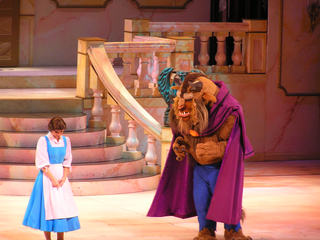
Disney’s Beauty and the Beast is a tale I have loved since I was a little girl. I could relate to Belle in ways that I couldn’t relate to the other princesses. People thought she was weird, she had brown hair, her mother was deceased, and she read a lot of books. She was my princess (P.S. This is why it should not have taken me as long as it did to understand why representation in media is so important. I’m sorry for that.)

The animated film and its live-action counterpart are beautiful to me. The animated version has sentimental value, the live action version has Audra McDonald. I realize the story on which this particular fairy tale is based is horrific and deals with some triggering issues, but I fell in love with the Disney version and that’s the one I’m sticking to. It taught me many things, so I’ll outline a few of them for today’s 10 things post.

  1. It’s okay to be a bookworm. Even Disney Princesses are bookworms.

  2. It is okay to stand your ground and be a little stubborn sometimes, even if it means you have to stand up to a real beast.

  3. Sometimes, the most popular guy in town is a total jerk face. A tool. A butthead.

  4. It’s okay if the whole town thinks you are weird. It means you stand out. Own it.

  5. It’s okay to talk to yourself a little, but you should probably be worried when the furniture starts to answer you.

  6. No matter how crazy your family is, there is always someone out there who is crazier (like a beast who talks to a candle, a clock, and a teapot for company).

  7. There is nothing like having your own personal library.

  8. You’re not always going to like what you see in the mirror, but you’ll always have the power to change it.

  9. It’s really better to tidy up the whole house and put things away rather than to make one room (or wing) “forbidden” and try to hide the mess.

  10. The more you love someone, the more attractive they become to you. 

I could have written a post like this for any and all of the Disney Princess line, but Belle holds a special place in my heart. Also, I’ve been incredibly busy lately and got sick to boot, so I wanted to focus on something light-hearted and fun. There’s nothing like a good story to make you feel better.

Book Review: The One Unspoken by Sarah Bryant

cover134267-medium

Sidonie Verdier was born in pre-Civil War Louisiana in the middle of a hurricane to a dying mother. Her father long gone to gamble his family fortune away, she was alone in the world before her life began. Her mother’s newly freed slave takes Sidonie in after she sees the tell-tale signs that Sidonie has the sight–she can see spirits.

The freewoman rears Sidonie on the abandoned plantation until her father returns home seventeen years later, determined to marry her off to the highest bidder. In the meantime, though, Sidonie falls in love with Gabriel, the son of the freedman next door.

Their relationship is illegal and could easily get both of them killed, but the ghost of Sidonie’s mother is on their side. When Sidonie’s father finds the perfect suitor and engages his daughter to the man without her consent she realizes that if she wants to be with Gabriel they have to run away to Europe. If they don’t run now, she’ll be married and he’ll be stuck running his father’s plantation–or worse.

#

I picked up this book because it is set in the south. I’m a southern girl and like to see how other people see the places that I’ve grown up knowing. The period setting of the book prepared me for some of what I read, but not all of it.

In short, sensitivity readers are important. Sidonie is reared by the former slave Adelis, who gives up her freedom to take care of the little white girl that she grows to love like a daughter. Adelis teaches Sidonie all about how to handle spirits, about zombies, and about voodoo. Sidonie even practices a ritual at one point. And until her father makes her, she wears her hair in braids and dresses like the slaves around her.

Just because the author acknowledges the inherent unfairness and desperation of the institution of slavery does not mean she can’t be guilty of cultural appropriation and romanticization. Adelis’ immediate maternal attachment to Sidonie even after she hated her mother to the core, Adelis and Gabriel’s mother are both voodoo practitioners originating from Haiti, Sidonie is welcomed without hesitation when she wanders into a slave celebration in a poor part of New Orleans and allowed to take center stage with the musicians, and Sidonie’s machinations–with Adelis’ help–is responsible for several of her father’s slaves being free in a twisted sort of white savior tale.

It’s not just problematic racially. Her gay piano teacher who lost his lover to cholera and the moment the ghost is “laid” (literally in the same instant) he moves on to the only other gay character in the book for a relationship. She even describes the light from his dead lover fading into his new boyfriend to try to explain why he falls for him so quickly and out of the blue. His grief over his deceased partner is gone in an instant because now there is another gay man in his life. Poof. Boom. Instant chemistry because they’re both gay. That’s it.

I don’t like to write bad reviews, but I feel like this story is problematic from the start. I found myself skimming over it just to get to the end and find out how deep the issues ran.

The author doesn’t seem to be malicious, or even aware, when it comes to the issues I’ve named. I don’t think it was purposeful. In fact, I get the impression she was trying to show a different side of the period society than most stories offer, but her execution of that desire went awry.

Perhaps I’m wrong about my interpretation of it. It’s possible. In any case, I can’t help but think that if you want to read about slave culture and voodoo that there are better sources out there.


Better Than Champions

On Sunday evening the Mississippi State University Women’s Basketball team played in the National Championship game. They lost on a heartbreaking shot in the last three seconds. I won’t comment on the officiating, though I want to. As a Bulldog fan, I have loved watching our team play. They work hard and watching them on the court is a beautiful thing.

Off the court, they’re still amazing. Our starting five included the Homecoming Queen, one of the tallest players in college basketball, one of the shortest, the coach’s daughter, and a single mother. They’ve each faced hardships beyond trying to balance getting a college education while busting it to make every practice, every game, every moment count on the court. Together, they are a national story because of their teamwork. Off the court, they’re just as awe-inspiring.

Victoria Vivians is the MSU Homecoming Queen from a tiny interstate town. She wrote an article last year for The Players’ Tribune in which she admitted to being incredibly shy. Being recruited for college athletics, playing on the national stage, and this year being crowned student body royalty hasn’t been easy. Yet, she has handled it with strength, beauty, and grace.

Teaira McCowan is 6’7”. She is a beautiful and talented lady, but she has been open in interviews about not always being comfortable in her own skin. She was 6’4” in middle school. When her brothers would go play basketball outside, she would stay indoors and watch because she didn’t want to be ostracized for her size by other kids. She also talks about being bullied because other kids wouldn’t believe she was their age, believing instead that she had been held back several grades because of her height. McCowan could be a poster child for not letting the bullies get you down. Her teammates jokingly call her a diva, laughing along with her when she gets caught making faces or striking a pose behind them or her coaches during on-court interviews. Now, she’s not just comfortable in her own skin, she’s the Naismith Defensive Player of the Year.

Morgan William, whose official height is listed at 5’5”, isn’t tall. When she told her father she wanted to play basketball, he didn’t sugar coat it for her about how hard it would be. But she didn’t give up, and neither did he. William’s father would start her day with extra practices at dawn. Drills, sprints, grueling work. It paid off when she was recruited to play for MSU, but it was a payoff that her father would never see. William unexpectedly lost her father during her senior year of high school. She had to take the court in college knowing her father would never be in the crowd, but she carried him with her anyway. Now, she has played in the national title game twice. And has dedicated a legendary Final Four buzzer beater shot to her dad’s memory.

Blair Schaefer is the daughter of head coach Vic Schaefer. Her father has been voted Coach of the Year by the WBCA. That’s a lot to live up to. And it hasn’t always been easy. As an underclassman, she thought seriously about transferring. She wasn’t getting the playing time she wanted, despite her numbers. Coach Schaefer told her she needed to come to his office just like any other player. He separated his role as her coach from his role as her father. No special treatment. Which is what Blair had to remember as she sat in his office and listened to her coach, her father, tell her that she had work to do. He cited her turnover rate, among other things, as reasons she wasn’t getting the playing time she wanted. It lit a fire under Blair. She took a break after the season was over and came back ready to play. Since that moment, Blair has busted her tail and worked her way into the starting five. Off the court, she scored an internship with Entertainment Tonight last summer. Her teammates have witnessed her work ethic first hand and have no doubt about her chances of success. The team says they can’t wait to see her on camera in the future. Her dad might be her coach, but Blair is a stand-out all on her own.

Roshunda Johnson is more than a college athlete. She’s a mom. Her son, Malaki, turned two last week. It’s a struggle and Johnson has said it isn’t always easy, but she has the support of her family and her son’s father. Stil, there are times, especially when she is traveling for games that she only gets to talk to her son on the phone while he stays with his grandmother. An article from earlier this month in the Clarion-Ledger, the leading newspaper in Mississippi, quoted both Johnson and her son’s father when talking about how difficult it has been to come back to basketball. She’s dealt with pain, both physical and emotional, but that hasn’t kept her from success both in the classroom and on the court.

Each of these women has dealt with their own share of obstacles and struggles. They lost the national championship, but every one of them is a winner. More than that, each one of them is a role model for what determination and hard work can do.

So when or if you see Mississippi State fans, like me, wishing our seniors well and giving the team our support and respect even after coming in second, you know why. Trophy or not, these women are champions. We’ll see them as nothing less. The cry of my alma mater is Hail State. It’s a simple phrase, but it can serve as a greeting, a salutation, a cheer, or that thing to say among ourselves when nothing else seems quite right. Our five starters–four seniors and a junior–have bright futures ahead, but they let us be a part of their journey and it has been awesome. To each of them, I say thank you and Hail State.

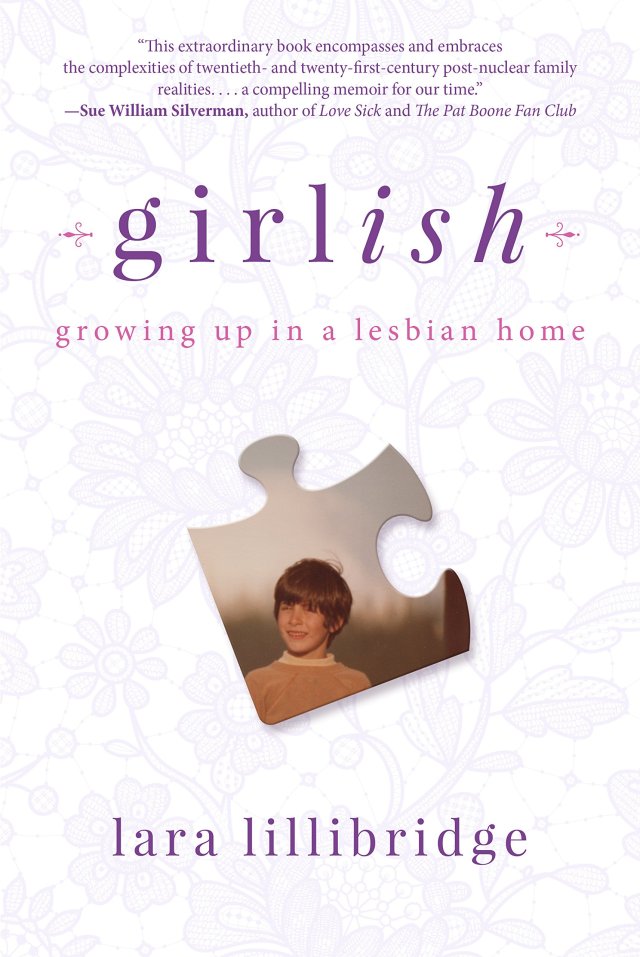
ARC Review: Girlish by Lara Lillibridge

81f2br2s4ezl

Disclaimer: I received a free copy of this book in advance of its publication date in exchange for an honest review. It debuts April 3rd and is available for pre-order.

I don’t read a lot of nonfiction. Reading is my escape and I like to stay on the fiction side of the aisle the majority of the time. However, every now and then something will catch my eye that has me putting down the make-believe in exchange for the real. Truth, after all, is sometimes stranger–and often funnier–than fiction.

I wasn’t sure about this particular book at first. On the surface, it didn’t look like I could relate to it. I didn’t grow up with lesbian parents. I’m younger than the author and our childhood references differ. I’m not from New York. We have seemingly nothing in common. However, a friend of mine suggested I read it because she couldn’t put it down.

So I decided to request it through NetGalley. I have an account there and have gotten a few ARCs (advanced reader copies) of books that are coming out soon so I can provide honest reviews to be available for potential readers by the date of publication. Seriously, after getting the copy of the book, I have no contact with the person sending it. There is zero pressure for me to love a book or to lie about loving it.

By the middle of the next day, I received my ebook copy of Girlish. The author is a name I have seen on Twitter and we were both interviewed for the Winterviews series on K.J. Harrowick’s site, though I have not ever actually met her. Still, I felt the slightest trepidation as I opened her life story. What if I hated it? How would I ever tell this poor woman that I couldn’t even finish her book?

For the record, that’s not a problem. She is so raw and real that I laughed, I cried, I cringed. The author tells the story in third person to give herself a bit of distance from it. I don’t blame her for a minute. I said before that from the outside looking in, I have nothing in common with this author, but as I read through her life story, I found myself nodding along with her feelings. Her struggles. Her heartbreak.

There were chapters that I could not stop reading, much to the detriment of my sleep schedule. There were chapters that I had to put down because I could not handle them and needed some distance myself (Be prepared for this, there are a few scenes that could be triggering). The book is an emotional rollercoaster. She doesn’t leave anything out. Even the ugly, hard stuff. She is so open about her experiences that you feel connected to her from the beginning.

It is a beautiful and also heart-wrenching account of a real person’s life. To me, it is proof that we are all more than the labels life hands us. Lara Lillibridge is labeled the daughter of lesbian parents, but that’s not all of who and what she is. Yes, it had some bearing on her experience, but it was not the sum and whole. Her parents are lesbians, yes, but there is more to each of them than that identifier.

And she is honest about the times in her life when she went through phases of being anti-lesbian because of what she went through. She admits the problematic thoughts she had at the time and that it took a few months, or sometimes years, to see things in a different light. She was, after all, a child trying to sort out who she was in life.

It is both painful and hilarious, but most of all it’s honest. She’s not perfect. Her parents weren’t perfect. Her childhood was messed up, but that seems to have less to do with her parents being lesbians than it does with the other factors in her life.

I would recommend this book to others with the caveat that there are some moments that can be triggering. I don’t want to set anyone off here, so if you need more information, head over the Contact Me page and send me a message. Otherwise, you can pre-order Girlish today or you can wait until April 3rd when it officially hits the market.