Book Review: Short-Straw Bride by Karen Witemeyer

I read a book (not this one) last week that I should have DNF’d. I didn’t. I had nightmares. A lot of them. I was not okay. This is why some of us who review books provide trigger warnings if we can.

To be honest, I cannot review that book. I could tell you about the well-developed characters and the way trauma was handled in the book, but I can’t bring myself to think that hard about certain plot elements right now. Maybe soon. Maybe never. I’m sorry.

After I finished that book, I needed a palate cleanser. Actually, I needed three, but I started with this one.

51g1zcrzoyl

Meredith Hayes knows that people trespass on Archer land at their own peril. The Archer men have secluded themselves for over a decade, ever since their father died, and do not take kindly to strangers. But Meredith also knows that Travis Archer, the eldest, has a kind and compassionate side because he helped her when she most needed it. So when she overhears a plot to burn them off their ranch, forcing them to sell the land, she feels she owes it to Travis to warn him.

Meredith arrives in time to warn the boys, but not without consequence. Suffering from a kick to the head by a fire-frightened mule, she is cared for by the Archers while she recovers. The only problem is that society doesn’t care why she was without a chaperone in a house full of men, her reputation is shattered and her guardian will not allow her to come home because of it. There is only one thing to restore her good name–she must marry an Archer.

Travis is the eldest and the only one who has known Meredith more than the three days it has been since she arrived with her warning. When he and his brothers draw straws to see who will marry her, he makes sure he’s the one who ends up with the short straw. It’s his responsibility, that’s all–or so he tells himself.

But the Archers aren’t in the clear yet. Someone still wants their land and will go to great lengths to get it. Travis and Meredith both want to protect the Archer ranch, but their desire to protect each other scares them far more than any villain ever could. Meredith knows that Travis feels responsible for her, but what she wants is to be more than just a short-straw bride.

#

This book was pretty cute on the whole. It was a clean, Christian Romance. If any of those words make you cringe, move on. For me, it was a good book to follow the One That Shall Not Be Reviewed. I enjoyed it, but it isn’t perfect, so I’ll still give you my usual breakdown.

First, the things I liked.

It was a clean read. After the “other book”, I needed that. Romance needed to be sweet and good again.

It’s a period piece set in post Civil War Texas, but it doesn’t pretend that the population of Texas was monochromatic or fair. There is a counterpoint to this coming, so don’t do a happy dance just yet.

Meredith has a disability that stems from a physical trauma in her childhood. While there are characters (never her love interest) who call her names, she is not written as a weaker character or one who laments her injury. It’s not a lot, and there are times that I don’t like the way it’s addressed, but there are so few main characters with any sort of physical disability that I have to appreciate this one.

The dog doesn’t die. The horses don’t die. I know it’s a stupid thing, but I needed this book to be a happy one. And any book that has an animal companion bite the dust is not a happy book. Where the Red Fern Grows almost undid me as a child.

Now, for the other side of the coin.

The non-white characters are few and all serve the same trope-y purpose. They are the hardworking mentor types with very little presence apart from that. So while I’m glad that there is no “white savior”-ness to the story, the old stereotypes are still present.

Also, there is only one type of non-white character. There is a settlement of Black “freedmen”, but there is no evidence in this Texas town of a Latinx population or a Native one. I find that improbable at best and erasure at worst. I don’t think it was intentional on part of the author to do so, but I think by pointing it out in books like this, perhaps more authors will be more intentional about inclusivity.

Meredith is treated as weaker by some of the characters because of her disability. It grated on my nerves, but I think that was intentional. Still, I point it out because if that is going to be upsetting to anyone, I’d like for you to know going in.

It is not at all thematic in the book, but there are a couple of lines in different chapters that had the echo of fat-shaming. It annoyed me more than offended me and it was fleeting, but it was there.

All in all, I still thought it was cute. And it was a good palate cleanser. Though, to be honest, I followed it up with two more for which reviews are coming. Seriously, that one book messed me up and I needed a chance to recover from it. Especially since I needed to be ready for the debut of Trail of Lightning by Rebecca Roanhorse that came out this week. You’ll be happy to know that I’m all through with my palate cleansing and was able to dive into ToL on the day of its debut. I’ll be reviewing that in a future post as well.
Book Review: Hounded (Iron Druid Chronicles #1) by Kevin Hearne

9533378

Atticus O’Sullivan leads a simple life. He runs an occult bookshop in Arizona where he sells specialty teas and is mostly sought out by local college kids who want to know if any of his special herbs are actually weed. At home, he is kept company by his Irish Wolfhound and an aging Irish widow from down the street. It’s a quiet existence for someone who still looks young enough to be in college alongside his clientele, but it’s all a deception.

Atticus is an anglicized name he took long ago. He’s actually twenty-one centuries old, and the last living Druid in existence. A fact that still irks one particular Irish deity to no end. And that deity, Aenghus Og, is about to catch up to him. Aenghus wants a mystical sword that Atticus is hiding, one that would give him untold power and a chance to take over his entire pantheon. Atticus has no choice but to protect the sword. But he can’t do it alone.

The druid must call upon his friends–his werewolf and vampire attorney team, a bartender possessed by a Hindu witch, and the Chooser of the Slain–to help him face his nemesis. Their two millennia dance has been fun, but enough is enough. Atticus knows that this time it’s him or Aenghus Og, and he’s not ready to die just yet.

#

I had a fabulous time reading this book. It was such a fun read that in an effort not to oversell it, I’m going to have to start with the things I didn’t like.

Most of the characters are of Irish, Polish, or Scandinavian origin, so even though they’re hanging out in Arizona, there is an overabundance of European white people. Even the Hindu witch has possessed a red-headed white girl. The cast is mostly monochromatic.

I’m sure that in over 2,000 years, Atticus has learned to work it, but over half the women he meets want to bed him. It started to be more comical than sexy. To be clear, I wasn’t upset about this, I just gave it an eye roll here and there. It was still worth the laughter.

There is more than one possession in the book, and I’ll have to be vague here to keep from spoiling anything, but one of them made me feel terrible for the possessee (is that a word?). The situation tried to be smoothed out, but there was only so much that Atticus could do. I didn’t like it, but it added a depth of character for Atticus. He’s not an altruistic hero. He’s more of a gray area type of main character, and it makes him more interesting.

So there were upsides to a few of the things I wasn’t crazy about. Now to the things I enjoyed.

The humor in this book is sprinkled through in such a way, that I never really stopped giggling. Even though heavy stuff was discussed, I never felt weighed down by it. I don’t need a palate cleanser book to help me recover from the gravity of it all. It was funny in all the right ways.

Oberon. The Irish Wolfhound is more than a companion animal, he’s a great character. He might actually be my favorite character. If someone bought me the stuffed Oberon from Kevin Hearne’s website, I wouldn’t complain.

The widow. She’s amazing. I hope there is more of her in books to come. If she dies at some point in the series, don’t tell me yet. I don’t think my heart could take it. Seriously, if it happens I will straight up ugly cry.

The battle scenes are not drawn out in ridiculous ways. The majority of fights in books and film are way too long compared to the average length of a fight in real life. But in Hounded, I never felt that the battles were unrealistic in length. Also, there is more mental maneuvering at play here. I loved that. Some of the battles are those of wit. My favorite kind.

Also, since I’ve been pretty open on my blog before that I’m a Christian, I’d like to add one more. I appreciate the way my religion is acknowledged by Atticus. It is not my deity that he doesn’t care for, it’s the people (we, the followers) who are the problem. I actually couldn’t agree more on that point.

There are other things I could gush over, but spoilers. I loved this book. I can’t wait to read the next one in the series. Beyond that, I’m signing up for Kevin Hearne’s newsletter and will eagerly look for more of his work to devour.

Highly recommend.


Book Review: The Rogue Retrieval by Dan Koboldt

28595063

Quinn Bradley is a Vegas magician. His dream in life is to headline at a casino on the strip and he’s finally got a shot to make the big time–until a powerful and mysterious corporation blocks him out. They want him to themselves, to go through a secret portal into another world and impersonate a guild magician in order to retrieve a rogue official. The problem is that in this new world, magicians aren’t illusionists, but wield real power and the penalty for impersonating one is death.

Quinn goes through the portal with the others on the mission, but things go wrong from the start. A dragon attack, a pack of wild dogs, a closed portal, loss of communication with the company on the other side, and a trap waiting for them, and that’s just the first day. They chase a ghost through groups of mercenaries and highwaymen only to find the rogue official is already three steps ahead. And Quinn pays the price when the magicians guild captures him.

In a strange and fortuitous turn of events, the magician who captures Quinn senses a spark of true magic in him. Instead of immediate execution, the guild gets to see what Quinn has to offer. If he can convince them he’s more than just razzle-dazzle he gets to keep his life, but he needs to do so before another group of rogues kills his comrades and destroys the portal, locking him in this strange world forever.

#

This was a good book. The characters were well-developed. Some plot points were predictable, but they were done with flair. I would recommend it to a lot of the readers I know. It didn’t quite grasp me the way I hoped it would, but I can’t put my finger on why.

First, the things I liked about the book.

Genre-bending. Is it Fantasy? Is it is Science Fiction? The truth is this story sports a little of both and I love that.

A cast that isn’t lily white or without distinctive character voices. There were two characters with similar voices, but they were still distinctive enough not to be confused. I like when characters aren’t cardboard cutouts of each other just taking up space in the background. I cared about each character’s struggles.

There were unanswered questions that didn’t make the novel into something that couldn’t stand alone, but left enough room so that the sequels (it is the first in a series) make sense and already have a pull.

Not everyone magically survives battles, wars, or thugs and those that do aren’t unscathed emotionally. It feels more real when the characters have scars.

Now for the things I wasn’t so keen on.

The admiration Chaudri has for Holt and the questions about their relationship allude to a workplace romance. I dislike the colleague romance tropes. It’s just not my thing. To be fair, it seems pretty one-sided and not like an abuse of power.

I like romantic subplots and there was one here, but it was an afterthought. That is a plus for a lot of readers. More power to you.

That’s pretty much it. It has a lot going for it, and I suspect if I read it on a different week than I did (I was busy and distracted) I’d have loved it instantly. And truthfully, I care enough about the characters that I’m still interested in the sequels. So when I say it didn’t grip me, don’t let that turn you off. I stand by my first statement. It’s a good book.

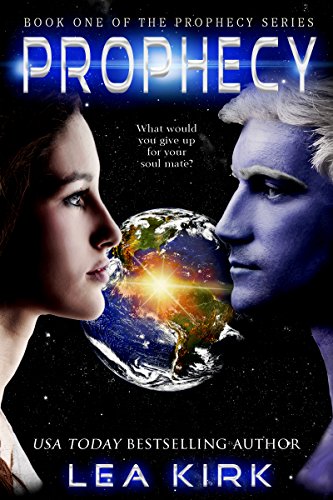
Book Review: Prophecy by Lea Kirk

51fsp12b7fxl

When an alien race attacks Earth and decimates the population, Alexandra Bock is caught in the crossfire. Captured and locked up with a small group of survivors intended for sale on the intergalactic slave market, she comes face to face with her least favorite thing–more aliens.

Gryf Helyg is part of the Matiran Guardian Fleet that has protected Earth for millennia. Betrayed by one of his own, Gryf is captured in the defeat of the fleet and is locked up with the very people he failed to protect–Earthlings.

Alexandra and Gryf get off to a rocky start, but it soon becomes apparent that their connection is more than tangential. They are each one half of a twelve-thousand-year-old prophecy about the protection, or destruction, of both Earth and Matir. To fulfill the prophecy the two have to bond their souls, forever tying their lives and their fates together. Gryf would do anything to protect Earth, but Alexandra quickly realizes more than her planet is on the line. Their bond could be a blessing to both their people, but it could also break her heart.

If Alexandra can overcome her fear and Gryf can maintain a level head, the two of them could save both their planets. If not, both of their races will be annihilated. But no pressure or anything.

#

I love a good sci-fi romance. This book had all of the parts of the equation. Aliens, both good and bad. Rescue missions. Intergalactic stakes. A heroine with bite. But each fell just a little bit short.

The book felt more like a season of a television show than a book. About every three chapters a problem was solved in a very episodic fashion, and with the breaks in between the story was choppy. There was potential, and of course, the story isn’t a Thriller, so the characters have to have a chance to react, but these characters begin a tryst on the outer border of their safe zone while the Watch looks on. They don’t take the threat seriously enough. I have seen this advice given to writers, so I think the intentions were good, but I don’t think the advice was applied to the book’s best advantage.

The Matirans are altruistic in the desire to protect Earth without anything in return. There is no trade, no tax, nothing from Earth–the planet doesn’t even know they exist. There is some weak DNA link from thousands of years ago, but it’s a weak argument for millennia of military resources and maneuvers, so the backstory and premise for their presence are weak.

Also, *Trigger Warning* one of the antagonists is a sexual predator. He impregnates a fifteen-year-old girl. He carves his initials in his victims’ skin to mark them as his possessions. He doesn’t make a lot of appearances, but it’s enough. It definitely affected my overall impression and opinion of the story.

As for our heroine, her bite was muzzled early on and she gives the reins to the Matirans without much fight. She also convinces her new extraterrestrial friends that their tradition of letting the woman make the first move in a relationship isn’t attractive to Earth women.

Your mileage may vary. Maybe this is up your alley. I won’t judge. But it wasn’t my cup of tea.

And to be clear, I’m not saying the author isn’t talented. Her concept for the story was intriguing, in the end, I just thought it could have been executed better, and perhaps without some of the more problematic elements.

Book Review: Leaving Oxford by Janet W. Ferguson

29775126

A year ago, Sarah Beth LeClair was a rising star in her advertising firm in LA, living in Malibu, and living with her doctor boyfriend. But then the accident happened. After that, the freeways, the memories, and the ghosts of LA were too much and Sarah Beth moved back home to Oxford, MS.

Still an advertising prodigy, she’s gainfully employed, but Sarah Beth has a secret. Her anxiety about driving on a highway is so debilitating that she can’t leave Oxford. When she gets outside the city limits, she has a panic attack. So she doesn’t leave.

Oxford is also home to the University of Mississippi, or Ole Miss, and the cutest offensive coordinator of any football team in history. Jess McCoy’s career is on the rise, too. Ever since he decimated his shoulder playing college ball and realized he couldn’t play pro, he’s wanted to coach in the NFL. And the opportunity is right around the corner.

The only problem for Jess is that he meets the beautiful and captivating Sarah Beth and begins to have feelings for her that he’s never experienced before. Suddenly, the thought of leaving Oxford isn’t quite as appealing as it was before…

#

Real talk: a year ago I would have loved and adored most of this book (I would have still had a bone to pick, but more on that later). I wanted to love it now. I’m from Mississippi. Ole Miss is the rival to my own alma mater, but I could let that go for the sake of a cute, clean, Christian romance set in my home state. But it didn’t quite live up to my expectations. Sigh.

There are several things it had going for it. It had a fun meet cute. It was clean. It was Christian based fiction, which I know is not a pull for a lot of people, but I’m a Christian and I like it. Football. Mississippi. A ridiculous and adorable dog.

A year ago the only thing that would have gotten on my nerves was some of what she wrote about coaching. My family is heavily involved in college sports. In the acknowledgments, Ferguson thanks former members of the Ole Miss coaching staff, so I know she at least asked a few questions. However, there were some inaccuracies that the average reader might not have noticed. Because college athletics were a part of the livelihood of my home for many years, I noticed.

Still, I could have gotten over that. Most people, even hardcore college football fans in Mississippi would have skimmed over it without much thought. I could swallow that. And a year ago, I might have. But after studying crafting and editing blogs and learning to look beyond my own perspective, there are some other things that don’t quite work for me.

Some of the dialogue feels stilted or in the wrong character voice. It’s a small thing, but it happens in several places and suggests an editing issue. And it’s not the only one.

Oxford, MS has never been this white. Is it possible that Sarah Beth’s social circle and the staff she interacts with at Ole Miss, and her office building in LA are all (except one Latino man) white? Yes, it’s possible. But when she writes about Oxford, she talks about driving through or around different areas of town and never acknowledges any character, and I mean anyone who is Black. That’s hard to swallow. The population of Mississippi is nearly 40% Black. That number gets higher in certain areas of the state. The university staff as a whole is about 30% Black. So to write a book set entirely in Oxford, Mississippi and not have a single Black character is at best incomplete. And neither the author nor anyone in the editing and publishing process seemed to notice.

I don’t have anxiety. Sarah Beth’s reluctance to accept her diagnosis and her struggle regarding using prescribed medications could be true to form. I don’t know. But the author’s treatment of diversity makes me think that a sensitivity reader should probably have been called in for this too.

I’m not trying to rip Ms. Ferguson apart. I’m saying that this book had potential, but fell short. It still has some cute scenes. I loved her line about how Mississippians feel about North Carolina and the return zinger. But I feel like this reads more like a manuscript draft than a polished and published novel.

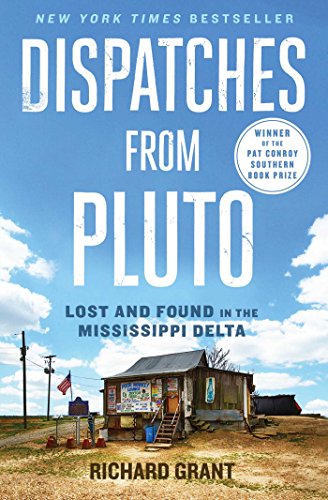
Book Review: Dispatches from Pluto by Richard Grant

I had a few DNFs this week, but was reminded of this gem when I recommended it to someone and don’t regret revisiting it.

515ompiob8l

Richard Grant is an English ex-pat who has been living in the United States for a number of years. While living in a small New York apartment, Richard took a trip with a friend of his to Mississippi. On a whim, he buys an old plantation house and moves into it with his girlfriend. And thus is the start of hilarity and truth.

Neither Richard nor his girlfriend are familiar with Mississippi, much less the Delta–not named for a geographical delta, but actually an alluvial plain. He is now a resident of Pluto, a town named for the mythological lord of the Underworld. And after stories for critters in the walls, battling bugs, and his initial feelings of complete isolation it doesn’t take much to figure out why.

He meets many interesting people along the way and starts to unravel the mystery of why the Delta is so different not just from the rest of the Mississippi, but the rest of the country. It is its own beast, something that fascinates Grant enough that he becomes enamored of his new home. A self-proclaimed nomad, he puts down roots.

But his transition is not without difficulty, and he relays stories as only an outsider can. Making friends with a Blues legend, an eccentric millionaire, a Hollywood celebrity, a local hunter, a cookbook queen, and many more, Grant doesn’t shy away from his observations about the racial tensions of the area or the major structural problems of the small towns throughout the region.

Despite its lingering problems, Grant declares that Mississippi is the best-kept secret in America.

#

I was born in the Mississippi Delta. The pictures across the top of my blog all come from places and events near my hometown. My entire family, including my step-family, originates from the same area. And this book brilliantly captures what makes the Delta so utterly unique.

The book barely scratches the surface on a lot of issues, both because it would take thousands of pages to delve deeply and the friendships with locals that help make the book what it is were still developing while he wrote it. But as I read it, I laughed until I cried. And on a couple of occasions, I just cried.

I moved out of the Delta when I was still in elementary school, but returned to visit family frequently throughout my childhood and young adult life. I can say with honesty, that it’s hard to recognize how weird of a place it is until you step outside of it. And seeing it through an outsider’s eyes is always both hilarious and humbling.

That’s the essence of this book. It’s a true account of this man’s experience as he tries to figure out how we, the people of the Delta, came to be the way we are. He talks about how his revelations affect his view of Mississippi in general and the Delta in particular. And let me assure you, the Delta is indeed a space all its own. I noticed in college at Mississippi State that most kids say things like “I’m from the coast,” or “I’m from Jackson,” with the same voice inflection that most people would say “I brushed my teeth this morning.” It’s just a fact. But when people say “I’m from the Delta,” it’s different. It’s a story. And Richard Grant wrote his book based on his attempts to figure out that story.

I didn’t read this book alone. My sisters and my stepmother read it and we would text each other back and forth about things we read. Mostly we were laughing at what the author thought was so utterly strange that was completely familiar to us. So if you want a pretty spot-on account of what makes the Delta tick, this is a great resource.


ARC Review: Unanchored by Stephanie Eding

Disclaimer: I received a free copy of this book in advance of its publication date in exchange for an honest review. It debuts next week.

unanchored-1600x2400

Cecily Hastings is a Welsh slave to the man her own parents sold her off to in exchange for food. She doesn’t remember what it’s like to be free, but it doesn’t mean she doesn’t crave it. She fears only two things in her pursuit of freedom, the beatings her master hands out at will and the Blood Pirate, the man who burned her village and killed her mistress years ago.

When her master gets drunk and swindled at the gambling tables, Cecily ends up being the payment. She is finally away from her master, but she’s not free. She’s been sold to none other than the Blood Pirate himself. Her worst fear has been realized.

But something doesn’t add up. The pirate who holds her captive treats her better than her master ever did. And she sees him freeing other slaves from around the British Isles as well. How could the man who burned her village and killed her mistress in cold blood be the man who buys her hair ribbons and protects her from harm?

When the British Royal Navy hot on their tails, Cecily has to make a choice. She can go with the soldiers and let them escort her back to her old master and let the fearsome pirate hang for his crimes, or she can grasp the only kind of freedom life has ever offered her and become the thing she hates most–a pirate.

#

This book reads as a young YA, in my opinion, but I thought it was fun and adorable. The underlying message of things not always being what they seem is felt over and over again. Sometimes bad guys look like good guys. Sometimes freedom doesn’t look like what you think it will.

It does romanticize piracy a bit, but it does so to make a point and has some fun with it in the process. The biggest drawback to the story is a general lack of diversity. All the characters more or less look the same and most of them blend into the background a little too easily. If you’re going to argue with me about Finnish and Welsh pirates being pretty monochromatic during the general era in question, I’m going to redirect you to the blog Writing with Color that had already addressed the subject (spoiler alert: Europe wasn’t ever actually lily white). 

On the plus side, the book has a clean romance arc and so is great for those teens (or any other age) who want an escapist tale without graphic sex scenes. The main character is a teenager, but her general naivete can sometimes make her seem younger, especially for a girl who has spent most of her life as a slave. In some cases she talks like she has seen things, in others, she seems oblivious. But I think this might suit some younger readers, especially those just crossing over to the YA market from MG, who want to read an older teen protagonist, but aren’t ready for some of the heavier scenes that often entails.

There are references to God and prayer in the book. It is sporadic, and I don’t think it is done in such a way as to be offensive to non-Christians. However, as a Christian myself, I admit that I may have a skewed view of that, since I like the way it was handled.

In the end, I would absolutely recommend this to a tween or younger teen reader (or anyone else who likes fiction for that age market) who likes pirate books and innocent romantic arcs. To be honest, I’d probably read it again myself as a beach read over vacation if my TBR pile didn’t mock me daily. Your mileage may vary.

Book Review: The One Unspoken by Sarah Bryant

cover134267-medium

Sidonie Verdier was born in pre-Civil War Louisiana in the middle of a hurricane to a dying mother. Her father long gone to gamble his family fortune away, she was alone in the world before her life began. Her mother’s newly freed slave takes Sidonie in after she sees the tell-tale signs that Sidonie has the sight–she can see spirits.

The freewoman rears Sidonie on the abandoned plantation until her father returns home seventeen years later, determined to marry her off to the highest bidder. In the meantime, though, Sidonie falls in love with Gabriel, the son of the freedman next door.

Their relationship is illegal and could easily get both of them killed, but the ghost of Sidonie’s mother is on their side. When Sidonie’s father finds the perfect suitor and engages his daughter to the man without her consent she realizes that if she wants to be with Gabriel they have to run away to Europe. If they don’t run now, she’ll be married and he’ll be stuck running his father’s plantation–or worse.

#

I picked up this book because it is set in the south. I’m a southern girl and like to see how other people see the places that I’ve grown up knowing. The period setting of the book prepared me for some of what I read, but not all of it.

In short, sensitivity readers are important. Sidonie is reared by the former slave Adelis, who gives up her freedom to take care of the little white girl that she grows to love like a daughter. Adelis teaches Sidonie all about how to handle spirits, about zombies, and about voodoo. Sidonie even practices a ritual at one point. And until her father makes her, she wears her hair in braids and dresses like the slaves around her.

Just because the author acknowledges the inherent unfairness and desperation of the institution of slavery does not mean she can’t be guilty of cultural appropriation and romanticization. Adelis’ immediate maternal attachment to Sidonie even after she hated her mother to the core, Adelis and Gabriel’s mother are both voodoo practitioners originating from Haiti, Sidonie is welcomed without hesitation when she wanders into a slave celebration in a poor part of New Orleans and allowed to take center stage with the musicians, and Sidonie’s machinations–with Adelis’ help–is responsible for several of her father’s slaves being free in a twisted sort of white savior tale.

It’s not just problematic racially. Her gay piano teacher who lost his lover to cholera and the moment the ghost is “laid” (literally in the same instant) he moves on to the only other gay character in the book for a relationship. She even describes the light from his dead lover fading into his new boyfriend to try to explain why he falls for him so quickly and out of the blue. His grief over his deceased partner is gone in an instant because now there is another gay man in his life. Poof. Boom. Instant chemistry because they’re both gay. That’s it.

I don’t like to write bad reviews, but I feel like this story is problematic from the start. I found myself skimming over it just to get to the end and find out how deep the issues ran.

The author doesn’t seem to be malicious, or even aware, when it comes to the issues I’ve named. I don’t think it was purposeful. In fact, I get the impression she was trying to show a different side of the period society than most stories offer, but her execution of that desire went awry.

Perhaps I’m wrong about my interpretation of it. It’s possible. In any case, I can’t help but think that if you want to read about slave culture and voodoo that there are better sources out there.


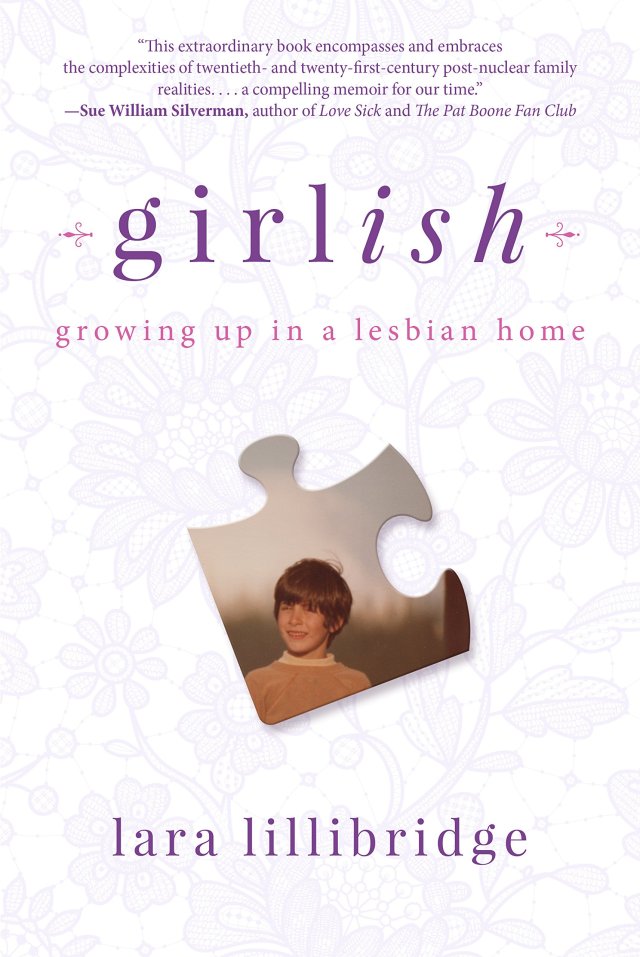
ARC Review: Girlish by Lara Lillibridge

81f2br2s4ezl

Disclaimer: I received a free copy of this book in advance of its publication date in exchange for an honest review. It debuts April 3rd and is available for pre-order.

I don’t read a lot of nonfiction. Reading is my escape and I like to stay on the fiction side of the aisle the majority of the time. However, every now and then something will catch my eye that has me putting down the make-believe in exchange for the real. Truth, after all, is sometimes stranger–and often funnier–than fiction.

I wasn’t sure about this particular book at first. On the surface, it didn’t look like I could relate to it. I didn’t grow up with lesbian parents. I’m younger than the author and our childhood references differ. I’m not from New York. We have seemingly nothing in common. However, a friend of mine suggested I read it because she couldn’t put it down.

So I decided to request it through NetGalley. I have an account there and have gotten a few ARCs (advanced reader copies) of books that are coming out soon so I can provide honest reviews to be available for potential readers by the date of publication. Seriously, after getting the copy of the book, I have no contact with the person sending it. There is zero pressure for me to love a book or to lie about loving it.

By the middle of the next day, I received my ebook copy of Girlish. The author is a name I have seen on Twitter and we were both interviewed for the Winterviews series on K.J. Harrowick’s site, though I have not ever actually met her. Still, I felt the slightest trepidation as I opened her life story. What if I hated it? How would I ever tell this poor woman that I couldn’t even finish her book?

For the record, that’s not a problem. She is so raw and real that I laughed, I cried, I cringed. The author tells the story in third person to give herself a bit of distance from it. I don’t blame her for a minute. I said before that from the outside looking in, I have nothing in common with this author, but as I read through her life story, I found myself nodding along with her feelings. Her struggles. Her heartbreak.

There were chapters that I could not stop reading, much to the detriment of my sleep schedule. There were chapters that I had to put down because I could not handle them and needed some distance myself (Be prepared for this, there are a few scenes that could be triggering). The book is an emotional rollercoaster. She doesn’t leave anything out. Even the ugly, hard stuff. She is so open about her experiences that you feel connected to her from the beginning.

It is a beautiful and also heart-wrenching account of a real person’s life. To me, it is proof that we are all more than the labels life hands us. Lara Lillibridge is labeled the daughter of lesbian parents, but that’s not all of who and what she is. Yes, it had some bearing on her experience, but it was not the sum and whole. Her parents are lesbians, yes, but there is more to each of them than that identifier.

And she is honest about the times in her life when she went through phases of being anti-lesbian because of what she went through. She admits the problematic thoughts she had at the time and that it took a few months, or sometimes years, to see things in a different light. She was, after all, a child trying to sort out who she was in life.

It is both painful and hilarious, but most of all it’s honest. She’s not perfect. Her parents weren’t perfect. Her childhood was messed up, but that seems to have less to do with her parents being lesbians than it does with the other factors in her life.

I would recommend this book to others with the caveat that there are some moments that can be triggering. I don’t want to set anyone off here, so if you need more information, head over the Contact Me page and send me a message. Otherwise, you can pre-order Girlish today or you can wait until April 3rd when it officially hits the market.


Book Review: The Darkest Part of the Forest by Holly Black

the-darkest-part-of-the-forest

Hazel lives in Fairfold, a small town at the edge of the forest that the Folk call home. Nobody remembers how the horned boy in the glass coffin came to be in the middle of the forest, but he slumbered through the decades, his handsome face never changing. Until Hazel woke him up.

Now strange and dangerous things are happening around Fairfold–more so than normal. Townspeople are being attacked by a tree monster that renders them unconscious with no way to awaken them, the high school is under attack from an unseen force, and the King of the Folk reveals that Hazel is in it all up to her eyeballs. He gives her a deadline to turn over his son, the horned prince, or all of Fairfold will face the consequences. The problem is the horned prince is a nice guy, and his father doesn’t want to welcome him home with open arms, he wants to kill him. And since Hazel’s brother is in love with him, it’s more than a little problematic.

Hazel has to find a way to hide the prince, defeat the king, and save her fellow townsmen before time runs out. With the help of the prince, her brother, and her brother’s best friend–who happens to be a changeling and Hazel’s lifelong crush, Hazel refuses to admit defeat. After all, she’s one of the best knights the Folk have ever known.

#

I don’t read a ton of YA. Don’t get me wrong, I have nothing against it. On the contrary, I will gladly read a compelling story regardless of the age category. It just so happens that I tend to read more adult-targeted books. This one, though, caught my eye.

It twists some old tropes into something that is both familiar and surprising. The characters are all distinctive and unforgettable. The voice is compelling. In fact, I wasn’t sure if I wanted to read this, but the blurb sounded interesting so I download a sample from Amazon. In the first few pages, I knew I had to see where it was going. The plot was barely off the ground, but the voice reeled me in.

There are some things about the story I was less than thrilled with. Any time there is a scene that breaks down to “I know I kissed your sibling, but it’s really you I’m into” or “I’m with you because your sibling won’t look at me twice” I tend to tap out. There are two such points in this story. However, this is a YA story. A high school setting. And since I witnessed this particular storyline play out more than once in my own high school (back when dirt was young and dinosaurs roamed the earth), I can’t argue that it isn’t realistic.

Overall the story was good, the voice was compelling and I don’t regret diving into it. I’m writing this review more than a week after I finished the story, so I’ve come down from the story high and am less attached to it now. That’s my fault. However, it had a flawed but still kick butt heroine, a beautiful male asleep in the glass coffin instead of a princess, and changeling who would have had me drawing hearts in a notebook during homeroom, so if you like fantasy, ya, or would like to read a story that doesn’t pretend the lgbtq+ community doesn’t exist in small towns in the middle of nowhere this could be what you’re looking for.